

 047 531 2217
 admin@ludadaandassociates.com
 Mon to Fri 08:00 - 17:00 | Saturday 08:00 - 13:00 | Sunday Closed
CASE STUDY 02
From Pattern Raise to a New PFFD Prosthesis
This case study follows a patient with PFFD condition through the transition from a traditional Pattern Raise to a new custom-made PFFD Prosthesis.
The before-and-after shows part of the change. The full case study explores the design considerations, clinical journey and patient experience behind the transition.
Watch Case Study 2
STARTING POINT
Living with a Traditional Pattern Raise
The patient presented using a traditional Pattern Raise to compensate for the significant limb-length difference associated with PFFD. The device had formed part of the patient's mobility for many years.
The purpose of this case was not simply to replace one device with another. It was to explore whether a different prosthetic approach could address the patient’s mobility needs while reducing reliance on a crutch and addressing concerns about the device’s appearance.
The patient also wanted greater freedom in clothing, including the option to wear long pants, and more flexibility in footwear rather than being limited to a single shoe that became difficult to manage, particularly after exposure to rain. Together, these factors shaped the patient’s overall experience of using the device and became important considerations in exploring an alternative approach.
A NEW APPROACH
From Pattern Raise to a PFFD Prosthesis
Rather than modifying the existing Pattern Raise, this case created an opportunity to explore a different prosthetic approach—one shaped not only by the patient’s anatomy, but also by how she wanted to move, dress and experience everyday life.
The shortened limb was accommodated within a custom-made prosthetic design, with the aim of addressing her mobility needs while responding to the personal priorities that had become important through years of living with the Pattern Raise.
The result was a new custom-made PFFD Prosthesis, developed around the patient’s anatomy, functional requirements and, importantly, the things that mattered to her personally.
This was more than changing one device for another. It was an opportunity to rethink how her PFFD could be prosthetically managed—bringing function, appearance and personal choice together in one approach.
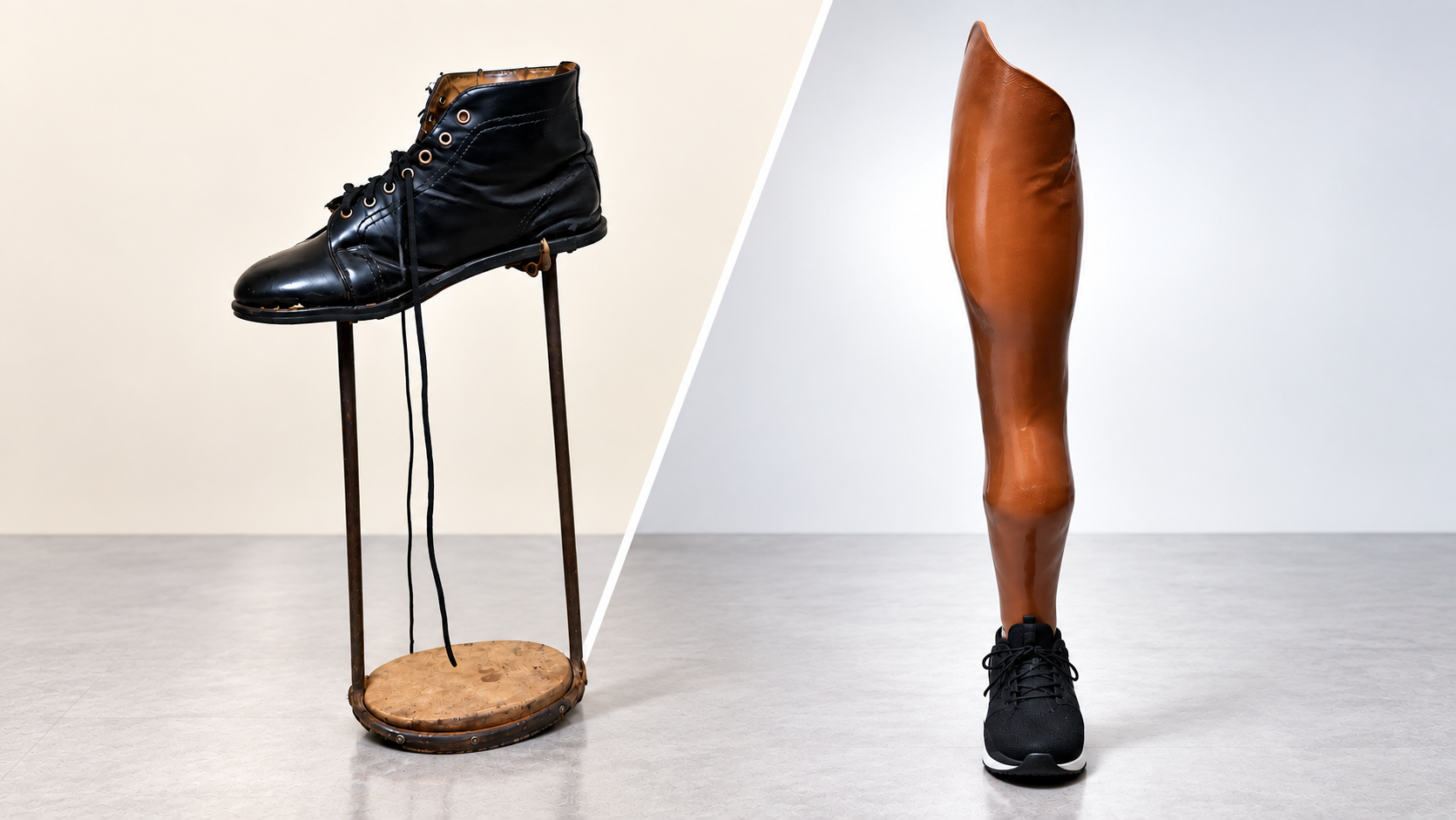
Traditional Pattern Raise → New PFFD Prosthesis
PROOF OF CONCEPT FOR PFFD PROSTHESIS
PFFD Prosthesis Conceptualization
The development of the new PFFD Prosthesis is beginning to tell a story through two very different patient journeys.
Case Study 1 began with a patient who had used a Straight-Leg Calliper for many years before transitioning to the new PFFD Prosthesis. More than 12 months later, the patient continues to use the new prosthesis.
Case Study 2 presented a different starting point. This patient transitioned from a traditional Pattern Raise to the new PFFD Prosthesis and has continued using the new device for the past 6 months.
So far, both of the first two patients have chosen to continue using their new PFFD Prostheses — giving us 100% adoption across these two early cases.
That is encouraging, but it also leaves us with an important question.
Why is this approach working for these patients?
Two patient journeys cannot answer that question. We still need to understand what is contributing to continued use, which aspects of the design matter most, which patients may benefit from this approach, and whether similar experiences can be reproduced in a larger group of people living with PFFD.
These first two patients have helped us see what may be possible. The next step is to understand why.
We want to understand the clinical and biomechanical factors that may be contributing to these experiences, evaluate patient-reported outcomes, and determine how this approach compares with existing methods of managing PFFD.
This is where we need the wider healthcare and research community.
HELP US TAKE THIS RESEARCH FURTHER
Hospitals and Healthcare Professionals
Patient referral for clinical care and research participation.
If you are managing a patient with PFFD, we welcome referrals for an individual clinical assessment.
Where appropriate, patients receiving care may also be invited to participate in future research evaluating the PFFD Prosthesis.
Clinical care and research participation are separate decisions. Participation in research would be subject to appropriate consent and research processes.
Academic Institutions, Researchers, and Clinicians
Research Collaboration
The observations from these first two cases raise questions that require expertise beyond prosthetic fabrication alone.
LAOS welcomes collaboration with healthcare professionals, researchers, universities and students interested in helping investigate the clinical, biomechanical and patient-reported outcomes associated with this emerging PFFD prosthetic approach.
Areas for further investigation could include gait and functional outcomes, pressure and load distribution, energy expenditure, patient-reported outcomes, device acceptance and comparative evaluation against established PFFD management approaches.